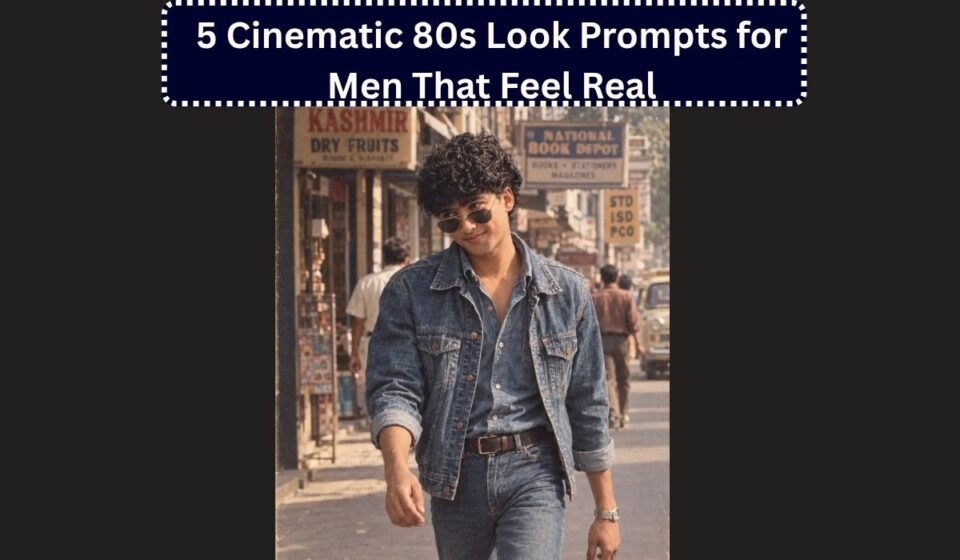

The men’s version of the 80s AI photo trend works on the same core idea as the women’s version, but the details that sell it are different. Instead of sarees and saree jewellery, it’s about mullets, leather jackets, aviators, denim, and that specific studio-flash look that defined family photo albums from the mid-80s. Get the styling details specific enough and the photographic texture right, and the result stops looking like a costume and starts looking like an actual photo from 1985.
Below are five distinct prompts, each with its own pose, location, and styling direction, so you’re not stuck generating the same shot five times over.
What makes an 80s men’s prompt convincing
Before the prompts themselves, three things consistently make the difference between a convincing result and an obviously fake one:
- Lock the face first, every time. State explicitly that the facial structure, skin tone, and expression must stay unchanged. This matters even more for men’s 80s looks, since styling changes like a mullet or a moustache can pull the model toward altering the underlying face along with the hair.
- Name the specific styling details. “80s clothes” is vague and usually produces a mismatched, generic result. Naming an actual jacket style, hairstyle, or accessory gives the model something concrete to render accurately.
- Vary the pose and setting deliberately. A standing studio portrait, a casual street shot, and an outdoor candid all read completely differently, even with identical clothing. Changing both across your five generations avoids getting five versions of the same photo.
1. Studio Portrait, Leather Jacket, Direct Flash
Pose: standing, arms crossed, confident half-smile. Location: plain studio backdrop.
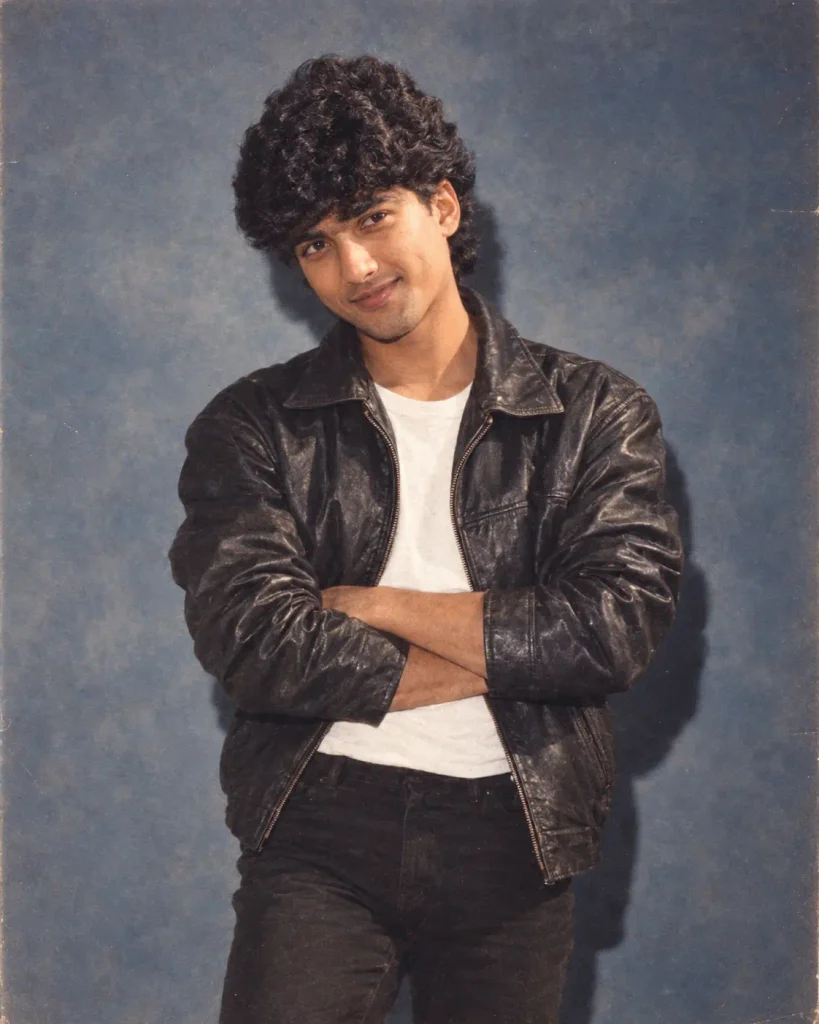
Use my uploaded photo as the exact identity reference. Keep my face, skin tone, and expression unchanged, don't make it generic or overly smooth.

Recreate this as a 1985 studio portrait. Style me with a feathered or slightly permed hairstyle typical of the era, wearing a black leather jacket over a plain t-shirt. Pose me standing with arms crossed, weight on one leg, a confident half-smile, looking slightly off-camera.

Use direct on-camera flash, a plain mottled studio backdrop in muted blue or grey, subtle film grain, and slightly faded warm tones. Avoid modern elements entirely, no smartphones, no contemporary hairstyles. 4:5 portrait orientation.
2. Street Candid, Denim-on-Denim, Walking Shot
Pose: mid-stride, caught candidly, not looking at camera. Location: a city street.
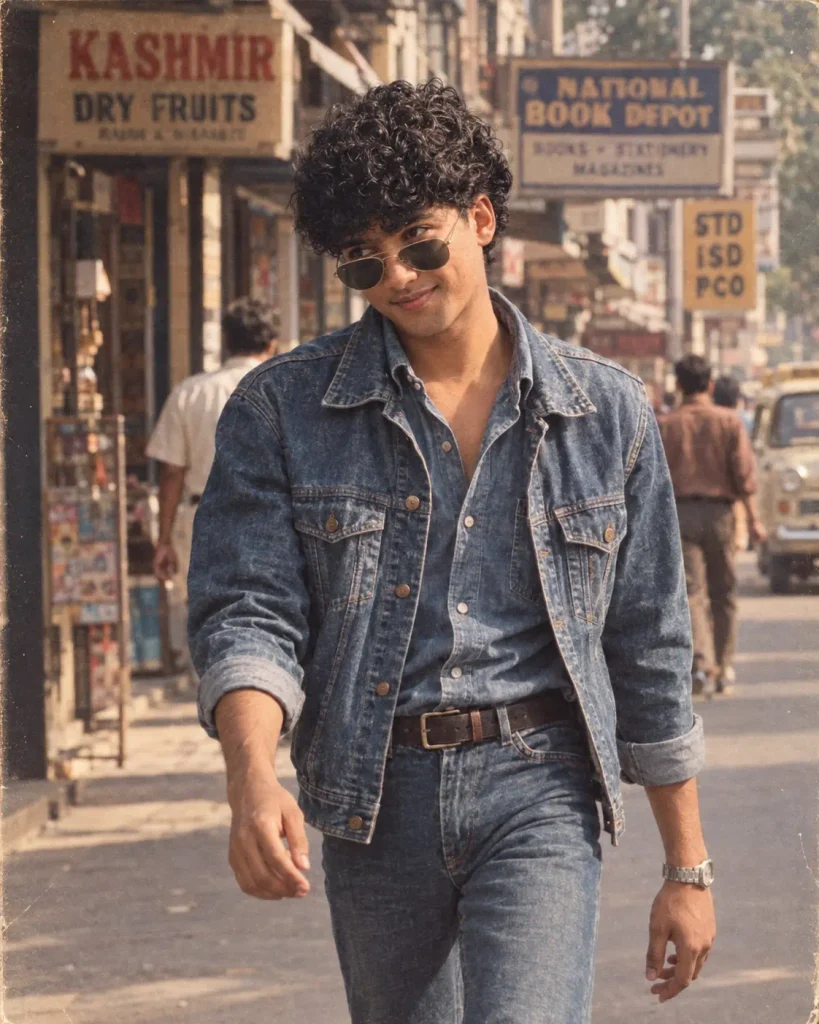
Keep my exact facial features and expression unchanged from my uploaded photo.

Show me walking down a city street in 1984, wearing a denim jacket over a denim shirt, flared or straight-leg jeans, and aviator sunglasses pushed slightly down the nose. Capture me mid-stride, caught candidly, looking off to the side rather than at the camera, as if photographed without posing.

Set the scene with period-appropriate shopfronts and old signage softly blurred in the background, natural daylight, mild film grain, and slightly faded colour tones. No modern cars, phones, or signage anywhere in frame. 4:5 aspect ratio.
3. Outdoor Lawn Portrait, Casual Family-Photo Style
Pose: seated on a lawn chair, relaxed, one arm resting on the chair’s side. Location: a suburban or house lawn/garden.
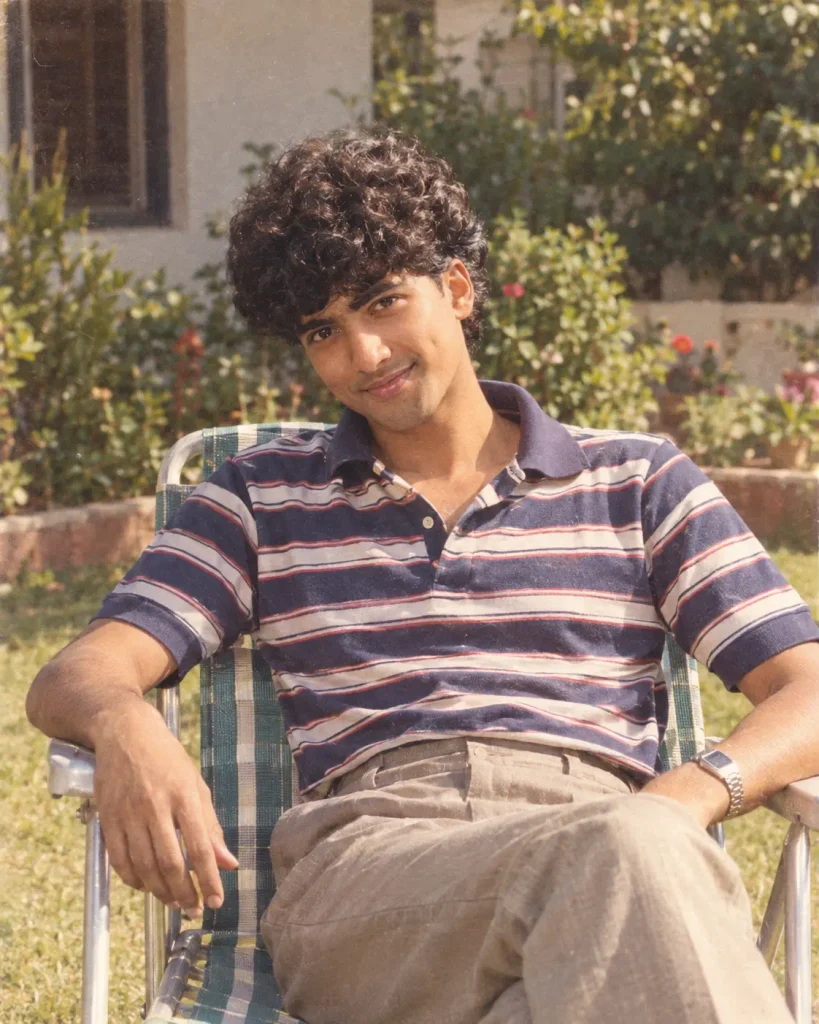
Preserve my exact facial identity, skin tone, and features from the uploaded photo.

Recreate this as a casual 1986 outdoor family-album photo. Style my hair in a classic short-back-and-sides or light perm look typical of the decade, wearing a striped polo shirt and high-waisted trousers. Show me seated on a simple outdoor lawn chair, relaxed posture, one arm resting on the chair's armrest, smiling naturally at the camera.

Use bright natural daylight with a direct flash fill, a modest house garden or lawn softly blurred behind me, warm faded colours, and light film grain. Keep the overall feel like an ordinary snapshot, not a professional shoot. Square or 4:5 format.
4. Nightclub or Disco Setting, Dynamic Pose
Pose: mid-motion, one hand raised, energetic. Location: a dimly lit disco/party setting.
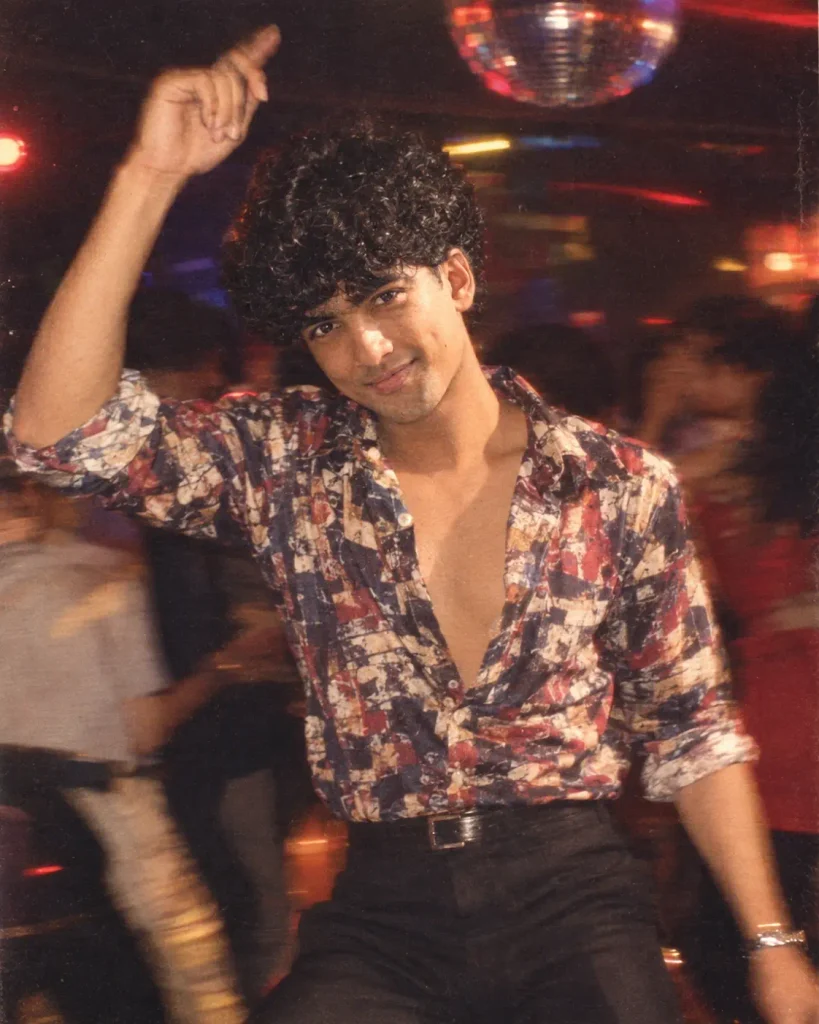
Keep my exact face and features unchanged from my uploaded photo, don't idealize or alter them.

Recreate this as a 1983 nightclub photograph. Style me with a bold period hairstyle, wearing an open-collar patterned shirt and slim dark trousers. Capture me mid-motion, one hand raised as if dancing, energetic expression, caught candidly rather than posed.

Use dim, colourful disco lighting, soft motion blur suggesting movement, blurred figures and light streaks in the background, and warm film grain typical of low-light flash photography from that era. Avoid any modern lighting rigs, LED effects, or contemporary clothing in the background. 4:5 or square framing.
5. Formal Studio Headshot, Moustache and Blazer
Pose: seated, hands folded, direct eye contact with camera. Location: formal studio setting.
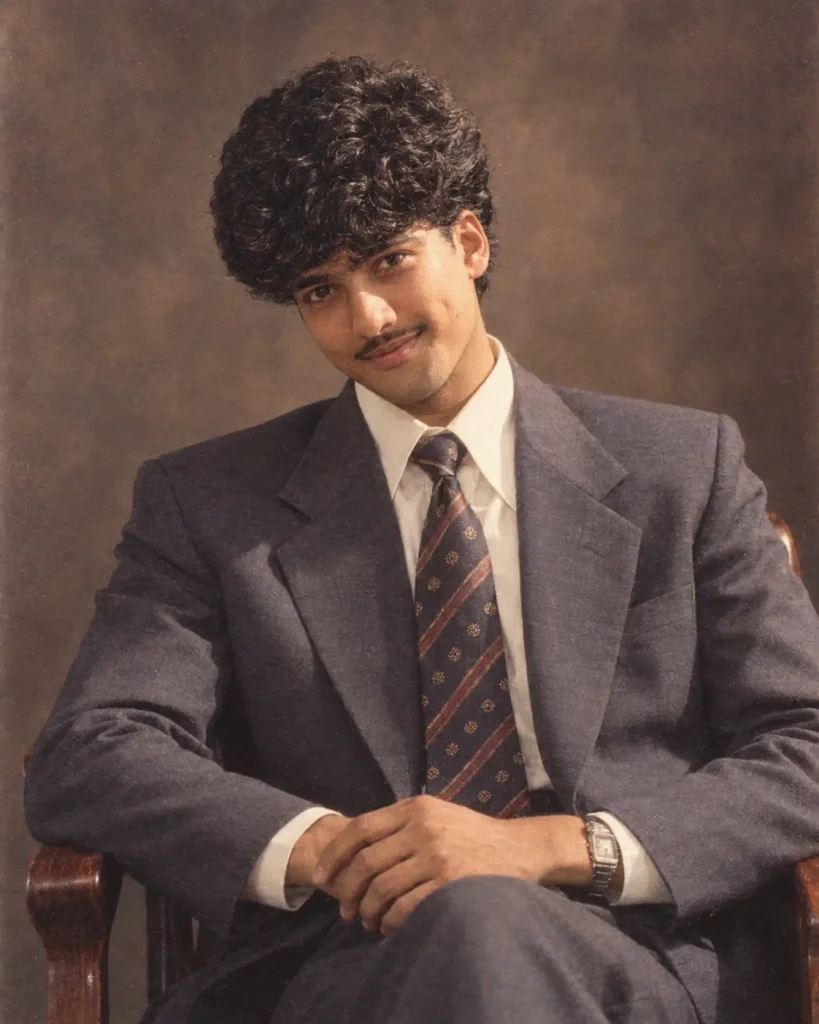
Use my uploaded photo as the exact identity reference, keeping my facial structure, skin tone, and expression fully intact.

Recreate this as a formal 1987 studio headshot. Style me with a period-appropriate moustache and neatly combed hair, wearing a boxy blazer over a collared shirt, possibly with a wide tie. Pose me seated, hands folded in my lap, direct eye contact with the camera, a composed, slightly formal expression.

Use classic studio portrait lighting with a soft key light and gentle shadow, a plain or gently textured backdrop in a muted colour, subtle film grain, and warm-toned colour grading typical of a professional studio photograph from that decade. 4:5 portrait framing.
Tips for getting a convincing result
- Start with a clear, front-facing, well-lit photo. Angled or shadowy source photos give the model more room to drift from your actual face, especially once a moustache or major hairstyle change is added.
- Name one specific hairstyle and one specific outfit per prompt, rather than listing several options. Overloading the styling instruction tends to produce a muddled, less convincing result.
- Vary pose and setting across generations on purpose, as done above. Running five prompts with the same “standing, smiling, studio backdrop” setup just gives you five near-identical images.
- If the face starts looking generic, reinforce it mid-troubleshooting with a line like “preserve exact facial structure, do not generate a generalized or idealized face.”
- Try the same prompt on both Gemini and ChatGPT. Facial likeness through a big styling change like a moustache or a mullet can vary noticeably between the two, so it’s worth comparing before picking a final image.
If you’d like, I can also put together a matching set for a specific decade-mashup theme, an 80s rockstar look, a cricket or sports-themed 80s portrait, or a formal wedding-guest 80s style.