
The 1970s golden hour editorial look is built around warm amber light, flared silhouettes, suede and denim textures, and that soft, slightly faded analog film grain that makes an image feel pulled from an old fashion magazine rather than a smartphone. The dreamlike, low-contrast quality is what separates this from a regular “make it vintage” prompt, it’s not about damage or distressing, it’s about warmth, softness, and a specific decade’s fashion silhouette.
Below are five distinct prompts, each with a different outfit colour and style, a different pose, and a different location, so you get five genuinely different editorial frames instead of the same wheat-field shot repeated.
What makes a 1970s golden hour prompt work
- Lock identity before the styling begins. A full fashion-editorial transformation, flares, suede, period hair, gives the model a lot of room to drift from your actual face. State clearly, up front, that your features must stay exactly as they are.
- Name the fabric, not just the garment. “Suede jacket” renders very differently from “denim jacket” or “corduroy blazer.” Specificity here is what actually sells the decade.
- Describe analog texture explicitly. Film grain, low-contrast shadows, warm amber grading, subtle lens flare. These four elements together are what create that dreamlike editorial look rather than a flat, digitally sharp photo.
- Give the pose editorial intent. Fashion editorials rarely show a straight-on smile. A turned shoulder, a hand in a pocket, a mid-stride walk, these read as intentional rather than snapshot-casual.
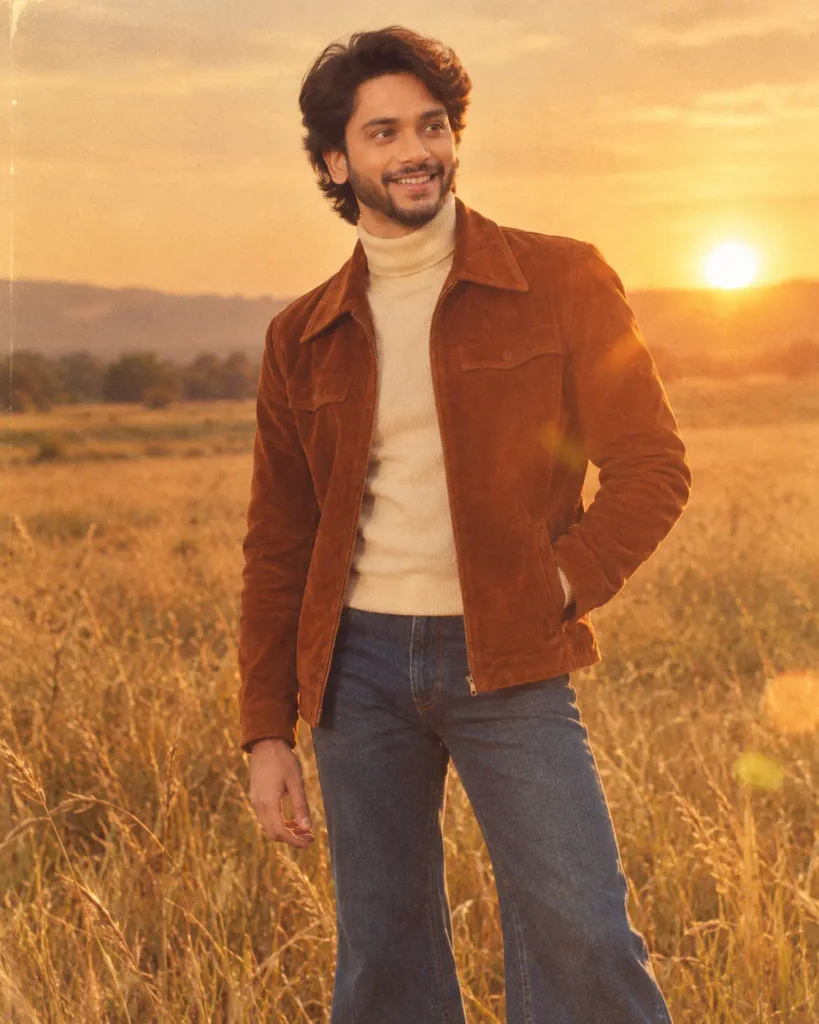
1. Suede Jacket, Open Wheat Field
Outfit: rust-brown suede jacket, flared denim jeans. Pose: standing at an angle, one hand tucked in a pocket, gazing off toward the horizon.
Use my uploaded photo as the exact identity reference. Keep my face, skin tone, and features completely unchanged, don't smooth or generalize them.

Recreate this as a nostalgic 1970s fashion editorial shot. Style me in a rust-brown suede jacket over a plain cream turtleneck, with flared denim jeans, period-appropriate feathered hair. Pose me standing at a slight angle to the camera in an open golden wheat field, one hand tucked casually in my jacket pocket, gazing off toward the horizon rather than at the lens.

Use warm amber colour grading from a low setting sun, subtle lens flare, analog film stock texture, low-contrast soft shadows, and a dreamlike, slightly hazy editorial aesthetic. 4:5 aspect ratio.
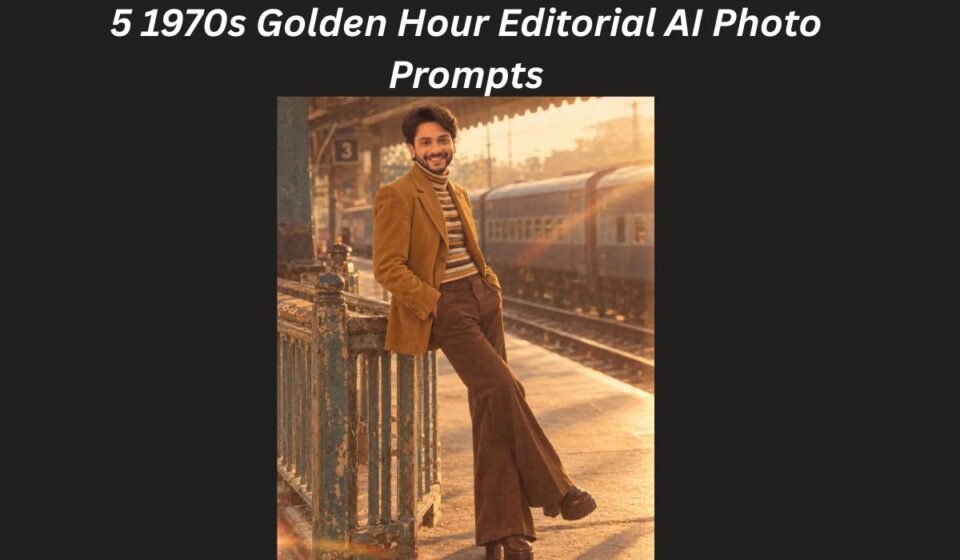
2. Corduroy Blazer, Abandoned Railway Platform
Outfit: mustard corduroy blazer, wide-leg brown trousers. Pose: leaning against a railing, one leg crossed, looking back over the shoulder.
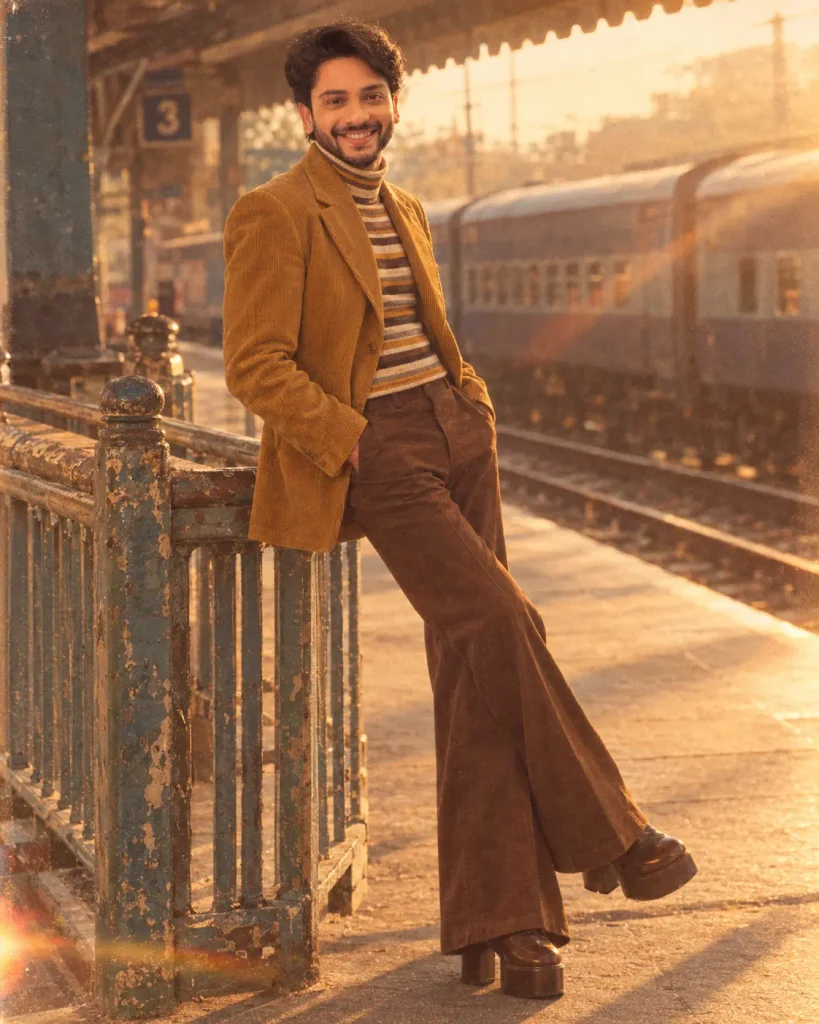
Keep my exact facial features and expression unchanged from my uploaded photo.

Recreate this as a 1970s fashion editorial shot. Style me in a mustard corduroy blazer over a striped turtleneck, with wide-leg brown trousers and chunky platform shoes. Pose me leaning against an old railway platform railing, one leg crossed casually over the other, looking back over my shoulder toward the camera with a relaxed, confident expression.

Use warm late-afternoon amber light, soft lens flare catching across the frame, visible analog film grain, muted low-contrast tones, and a nostalgic, dreamlike editorial mood. 4:5 or 16:9 framing.
3. Flowing Paisley Dress, Desert Highway
Outfit: deep burgundy paisley-print maxi dress, wide-brim felt hat. Pose: walking along an empty highway, dress caught mid-motion in the wind.
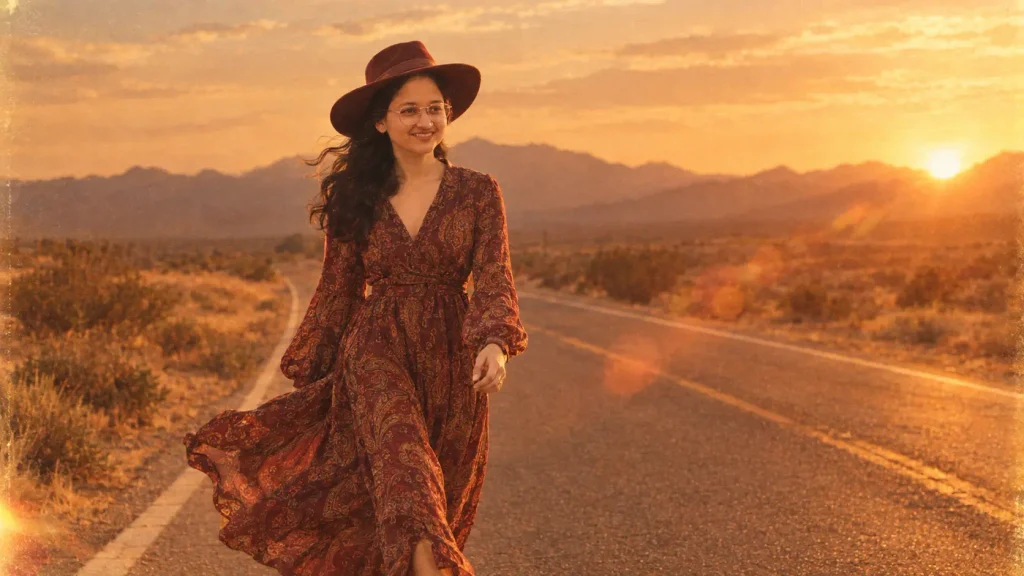
Preserve my exact facial identity, skin tone, and features from the uploaded photo.

Recreate this as a dreamy 1970s fashion editorial shot. Style me in a deep burgundy paisley-print maxi dress with a wide-brim felt hat, period-appropriate loose waved hair. Capture me walking along an empty desert highway at golden hour, the dress and hat brim caught mid-motion in a gentle breeze, caught mid-stride rather than posed still.

Use warm amber-to-orange colour grading, soft analog film texture, gentle lens flare along the horizon, low-contrast dreamlike shadows, and a wide, cinematic framing. 16:9 aspect ratio.
4. Denim-on-Denim, Vineyard Rows
Outfit: light-wash denim jacket and matching flared denim jeans, tied bandana at the neck. Pose: seated on a low stone wall, elbows on knees, relaxed half-smile.
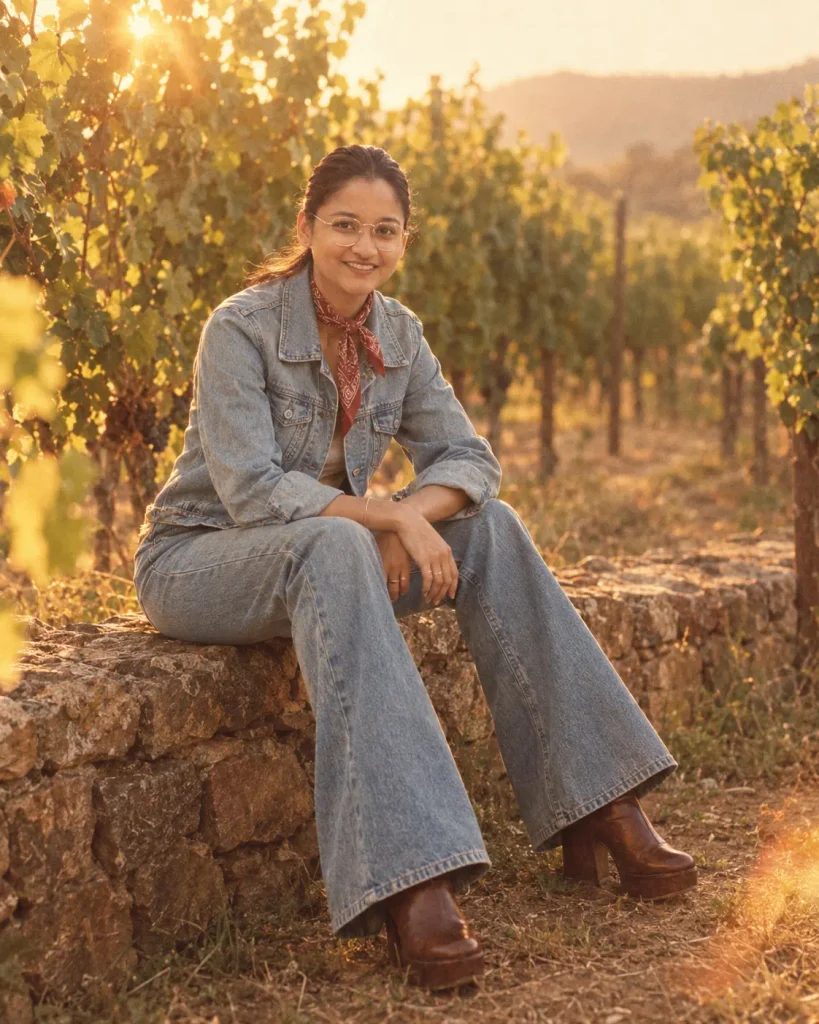
Use my uploaded photo as the identity reference. Keep my face, skin tone, and expression exactly as they appear, don't idealize or alter them.

Recreate this as a nostalgic 1970s editorial shot. Style me in a light-wash denim jacket and matching flared denim jeans, a loosely tied bandana at my neck, period-styled hair. Pose me seated casually on a low stone wall between rows of vineyard vines, elbows resting on my knees, relaxed half-smile, looking toward the camera.

Use warm golden sidelight filtering through the vines, soft analog grain, low-contrast muted tones, gentle lens flare, and a relaxed, dreamlike editorial mood. 4:5 aspect ratio.
5. Velvet Shirt, Rooftop at Dusk
Outfit: deep green velvet shirt unbuttoned at the collar, flared black trousers. Pose: standing with arms loosely crossed, head tilted slightly, confident gaze.
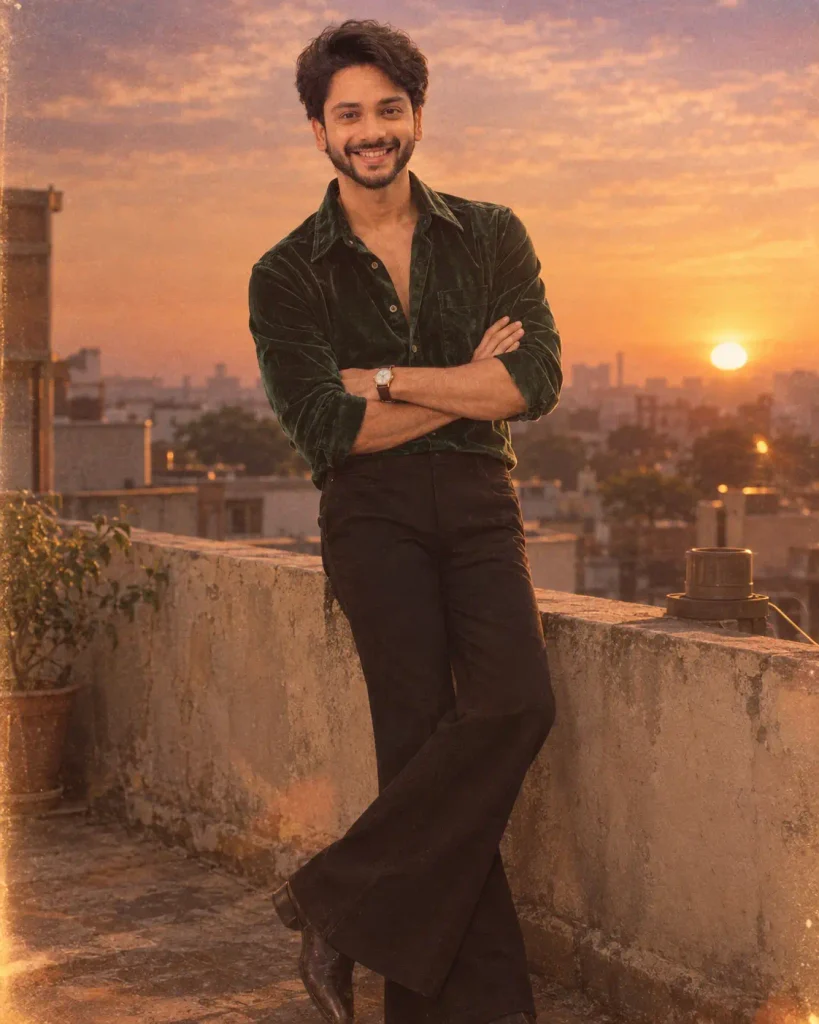
Keep my exact facial features and expression unchanged from my uploaded photo.

Recreate this as a 1970s fashion editorial shot. Style me in a deep green velvet shirt unbuttoned at the collar, flared black trousers, period-appropriate voluminous hair. Pose me standing on an open rooftop at dusk, arms loosely crossed, head tilted slightly, confident and composed gaze directly toward the camera.

Use warm amber dusk light fading into soft purple at the edges of the sky, visible analog film grain, subtle lens flare, low-contrast dreamlike shadows, and a cinematic editorial colour grade. 4:5 vertical framing.
Tips for a more convincing result
- Start with a clear, front-facing, well-lit photo. A full editorial transformation, period hairstyle, fabric, and lighting, puts real pressure on identity, so a sharp reference photo matters more here than in simpler styles.
- Always name three things together: fabric, light direction, and film texture. Suede or velvet, low setting sun or dusk light, analog grain and lens flare. Leaving any one out tends to flatten the dreamlike effect.
- Avoid asking for damage or distressing. This style is about warmth and softness, not scratches or sepia tones, those push the result toward “old photo” rather than “editorial throwback.”
- Vary outfit, pose, and location together, as done above, so a full set reads as five different shoots rather than five versions of the same wheat field.
- Compare results across Gemini and ChatGPT. Film grain and warm colour grading render quite differently between the two, so it’s worth generating the same prompt on both and picking whichever holds the dreamlike quality most convincingly.
If you’d like, I can also put together a 1970s editorial set for a couple, a rainy urban variation, or a nighttime disco-era version with neon instead of golden-hour light.