Tata Sierra Review: A Legend Reborn — India’s Most Emotionally Charged SUV Comeback Finally Gets the Car to Match the Name

Advertisement
Some Cars Are Just Products. Some Cars Are Promises. The Original Tata Sierra Was a Promise Made in 1991 and Broken in 2004. This Is the Story of What Happens When You Keep a Promise 21 Years Late.
In 1991, when the original Tata Sierra rolled off the production line, India had never seen anything quite like it. A domestic manufacturer building a proper SUV — not a van with a roof welded on, not a modified truck cabin, but a genuine, purpose-built Sports Utility Vehicle with a boxy silhouette, a distinctive rear three-quarter glass, and a 4×4 drivetrain that suggested adventure rather than simply transport.
Advertisement
It became iconic in the way only a few Indian vehicles have. Not because it was the most refined, not because it was the most powerful, and certainly not because the road network of early 1990s India could justify its capabilities. But because it looked like freedom. And in a market dominated by Ambassadors and Marutis, looking like freedom was more than enough.
Then, in 2004, Tata discontinued it. And for the next two decades, the Sierra existed only in nostalgia — in the memories of fathers who owned one, in the stories those fathers told their children, and in the imagination of automotive enthusiasts who wondered what a modern Sierra might look like.
On November 25, 2025, Tata answered that question.
The automotive landscape is full of revived nameplates, but few carry the emotional weight of the Tata Sierra.
The new Tata Sierra — launched at Rs 11.49 lakh with three engine options, triple-screen technology in top trims, a 622-litre boot, 5-star Bharat NCAP safety credentials, Level 2 ADAS, a 1,525 mm panoramic sunroof, and 10,000 deliveries already completed — is the most consequential Indian automotive comeback since the Mahindra Thar went from cult to mainstream.
But this Tata Sierra review is not simply about nostalgia. Because nostalgia is what brings buyers to the showroom. Engineering is what brings them back for a second purchase — and what determines whether the Sierra becomes a legacy or merely a footnote in Tata’s product history.
Let us find out which one it is.
Quick Overview: What Is the 2025-2026 Tata Sierra?
Tata Motors launched the new Sierra on November 25, 2025, and it slots in the middle of the Curvv and Harrier SUVs in the homegrown carmaker’s lineup. The Sierra price starts from Rs 11.49 lakh to Rs 21.29 lakh (ex-showroom), with 24 variants on offer.
The Sierra features Tata’s new 1.5-litre four-cylinder turbo petrol engine that produces 158 bhp and 255 Nm. It is paired with a six-speed automatic gearbox sourced from AISIN. There is also a naturally aspirated version of the same engine that produces 105 bhp and 145 Nm. This unit comes with either a six-speed manual or a seven-speed dual-clutch automatic. The diesel continues with the familiar 1.5-litre motor that delivers close to 116 bhp.
Three engines, multiple gearboxes, seven trim levels — Smart+, Pure, Pure+, Adventure, Adventure+, Accomplished, and Accomplished+ — and two upcoming additions: an EV version expected in July 2026 and an AWD option under active consideration.
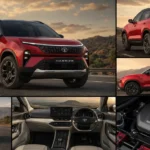
The new Tata Sierra captures the nostalgia of the classic’s rear three-quarter glass via blacked-out roof, and C-pillar. The triple-screen setup covers a large part of the dashboard. Dashboard-mounted sound bar is a new addition aimed at enhancing cabin acoustics. The new Tata Sierra gets the largest-in-segment 1525mm x 925mm panoramic sunroof.
The Sierra is built on Tata’s new ARGOS platform — developed specifically for this vehicle family and fully capable of supporting AWD and EV powertrains. At 4,340 mm in length with a 2,730 mm wheelbase, it is positioned between the Curvv EV and the Harrier in Tata’s SUV hierarchy.
Tata Sierra has crossed 10,000 deliveries milestone across India. The Tata Sierra currently commands a waiting period of up to 3 months.
10,000 deliveries and three-month waiting periods within months of launch. The market has already given its verdict on the Sierra’s appeal. Now let us give the complete, honest review.
Exterior Design: Where Nostalgia Meets Modernity, and Both Win
The new Sierra makes an impression the moment you lay eyes on it. The upright, squared-off stance instantly reminds you of the OG, only now it’s cleaner, sharper, and carries a subtle Land Rover-like maturity. The high bonnet adds presence, the grille looks confident, and the full-width LED DRLs give it a modern face.
The Sierra’s exterior design is where the Tata Sierra review becomes genuinely emotional — because the design team has achieved something difficult. They have honoured the original without being slavish to it. The visual DNA is preserved. The spirit is translated. But the execution is entirely 2025.
The SUV features a boxy, upright silhouette, a thick B-pillar and blacked-out rear glass section, reminiscent of the iconic three-door Sierra. In its modern iteration, the Sierra is available with petrol and diesel engines.
The full-width LED light bar at the front — connecting the LED headlamp clusters across the bonnet top — is the Sierra’s most modern design element, and it sits comfortably alongside the traditional upright bonnet and squared front face. The grille’s pattern and the bumper’s treatment are contemporary without being derivative of any European influence. This is a face that looks genuinely Indian — bold, honest, and confident about what it is.
Move to the side and the strongest callback appears. That wraparound-style rear glass reinterpretation. It’s sleeker, more premium, and easily the Sierra’s most recognisable design element. Chunky cladding and flush door handles add to its SUV attitude.
The kinked rear window line and the blacked-out C-pillar — the design signatures that made the original Sierra instantly recognisable at a glance — have been translated into the modern SUV format with surprising fidelity. The original’s rear three-quarter glass has become the modern car’s most discussed design element, and justifiably so. It creates a floating roof visual effect that simultaneously references 1991 and reads as contemporary 2025.
Tata Sierra is back and is one of the best looking SUVs on Indian roads, especially in the Andaman Adventure yellow shade.
The six colour options — including Andaman Adventure Yellow, Bottle Green (Munnar Mist), Jet Black, Lunar Slate, Metallic White, and a dual-tone option — give the Sierra one of the most expressive colour palettes in its segment. Andaman Adventure Yellow is the design team’s hero colour — the one that communicates the Sierra’s adventure DNA without subtlety. Munnar Mist is the sophisticated choice for buyers who want something distinctive but not loud. Jet Black makes the floating roof effect most dramatic.
The dual-tone 19-inch alloy wheels on higher trims fill the substantial wheel arches with visual authority. The flush-type door handles add a modern EV-influenced touch. And the spare wheel — moved from the tailgate-mounted position of the original to an under-floor location — eliminates the rearward visual interruption and gives the Sierra a cleaner, more premium tail.
One honest exterior limitation:
The Sierra features Tata’s new 1.5-litre four-cylinder turbo petrol engine that produces 158 bhp and 255 Nm. It is paired with a six-speed automatic gearbox sourced from AISIN.
The unpainted plastic cladding on several variants — noted by reviewers as inconsistent with the Sierra’s premium aspiration — is the exterior’s most legitimate visual criticism. The Curvv EV uses painted cladding. The expectation at the Sierra’s top price point is similar treatment. This is a manufacturing cost decision that Tata should address in a future update.
Overall exterior verdict: one of India’s most distinctively designed mid-size SUVs. The Sierra’s exterior successfully bridges emotional heritage and contemporary execution in a way that almost no revival nameplate achieves. It earns every bit of its 10,000 early deliveries.
Interior Design and Cabin: The Triple Screen That Changes Daily Life — And the Inconsistency That Prevents Perfection
New control stalks and window switches feel more premium than past Tata units. Front seats are comfy with extendable under-thigh support and well-judged cushioning. Rear space is generous for three adults, with ample knee, shoulder and headroom. Rear passengers get window blinds, AC vents, USB ports, reclining backrest, boss mode, and a fold-down armrest. All three get adjustable head restraints and three-point seatbelts. Boot space is 622 litres to the roof (450 litres to the parcel shelf), expanding to 1,257 litres with the rear seats down.
Step inside the Accomplished+ top trim Sierra and the triple-screen dashboard is the first and most arresting visual impression. Three screens — the instrument cluster display on the left, the central infotainment touchscreen, and a passenger-side display on the right — occupy most of the dashboard’s upper face. Combined with the dashboard-mounted JBL soundbar that runs horizontally below all three screens, the Sierra’s top-spec interior looks unlike any other Indian SUV at any price.
The triple-screen setup covers a large part of the dashboard. Dashboard-mounted sound bar is a new addition aimed at enhancing cabin acoustics.
The soundbar placement is genuinely innovative. Standard automotive sound systems mount tweeters in the A-pillar, mid-range drivers in the door panels, and subwoofers in the boot. The Sierra’s dashboard soundbar positions audio output directly in the primary driver and passenger sightline, creating a sound stage that fills the cabin’s forward space rather than emanating from the sides. For music and podcast listeners, this placement is noticeably different from conventional systems.
The front seat ergonomics deserve specific praise:
Front seats are comfy with extendable under-thigh support and well-judged cushioning.
The extendable under-thigh support — criticised for absence in the Tata Harrier at higher prices — is specifically confirmed as present in the Sierra. For long highway drives, under-thigh support prevents the front edge of the seat from cutting into the thigh and causing the discomfort that accumulates into serious fatigue after two hours. This ergonomic feature makes the Sierra genuinely better for highway travel than many rivals at higher prices.
Boot space is 622 litres to the roof (450 litres to the parcel shelf), expanding to 1,257 litres with the rear seats down. A wide opening and low loading lip help, though wheel wells intrude slightly and the electric tailgate needs more clearance.
622 litres to the roof with all seats occupied is genuinely exceptional for this segment. The Hyundai Creta offers 433 litres. The Kia Seltos offers 433 litres. The Renault Duster offers 700 litres without the rear seat folded. The Sierra’s 622 litres, expanding to 1,257 litres with the rear seats folded flat, creates a cargo versatility that competitors cannot match.
But here is where the honest cabin assessment requires courage:
The interior quality and finish are inconsistent in places.
The lower-spec Tata Sierra features a two-screen dashboard setup.
Two honest limitations: the interior quality and finish inconsistency — where some touchpoints feel premium and others reveal cost-saving decisions — and the significant difference between lower and higher variant cabin experiences. Buyers who see the Accomplished+ in a showroom and then find their budget only reaches the Smart+ or Pure will discover a considerably less impressive cabin. The dual-screen lower variant interior, while functional, loses the visual drama that makes the top-spec Sierra genuinely outstanding.
The rear seat experience is where the Sierra makes some of its strongest arguments:
Rear space is generous for three adults, with ample knee, shoulder and headroom. Rear passengers get window blinds, AC vents, USB ports, reclining backrest, boss mode, and a fold-down armrest.
Boss mode — which moves the front passenger seat forward from a rear-seat mounted control, creating maximum rear legroom for the second-row passenger behind the front passenger — is a luxury feature typically found in executive-class vehicles at double the Sierra’s price. Its presence in the Sierra communicates genuine ambition about the rear passenger experience.
The rear window blinds, reclining rear backrest, and dedicated USB ports for rear passengers collectively make the Sierra’s rear seat among the most thoughtfully equipped in the mid-size SUV segment. For a family where adult passengers regularly use the rear seat — parents-in-law on long journeys, for instance — these features meaningfully improve the experience over rivals that treat rear passengers as an afterthought.
Engine Options and Performance: Three Personalities, One Body
This is where the Tata Sierra review becomes genuinely complex — because Tata has offered three distinct powertrains that give the Sierra three fundamentally different ownership personalities.
The 1.5L Turbo Petrol — The Enthusiast’s Choice
The Sierra features Tata’s new 1.5-litre four-cylinder turbo petrol engine that produces 158 bhp and 255 Nm. It is paired with a six-speed automatic gearbox sourced from AISIN.
158 bhp and 255 Nm from a 1.5L direct-injection turbo-petrol — the same Hyperion engine architecture deployed in the Harrier and Safari, here tuned for the Sierra’s specific weight and application. This is the performance variant for buyers who want the Sierra to have genuine sprint capability alongside its practical attributes.
The AISIN 6-speed torque converter automatic paired with the turbo petrol delivers the same smooth, refined shifting behaviour that reviewers praised in the Harrier petrol context. The combination of strong low-rpm torque and a smooth gearbox creates an urban driving experience that feels effortless — the Sierra simply goes when you ask it to, without drama or lag, in a way that naturally aspirated alternatives cannot replicate.
The 1.5L Naturally Aspirated Petrol — The Accessible Entry
There is also a naturally aspirated version of the same engine that produces 105 bhp and 145 Nm. This unit comes with either a six-speed manual or a seven-speed dual-clutch automatic.
The NA petrol is the budget entry point — priced from Rs 11.49 lakh, it brings the Sierra’s design, space, and safety package to buyers who cannot stretch to the turbo’s price premium. The 7-speed DCT pairing is interesting — it is a quicker-shifting transmission than the torque converter automatic on the turbo, though with the characteristic low-speed jerkiness that DCTs share.
For buyers who primarily drive in city traffic and occasionally venture onto highways at moderate speeds, the 105 bhp NA petrol with DCT is perfectly adequate. For buyers who regularly carry four or five adults and need confident highway overtaking capability — the turbo is a meaningful upgrade.
The 1.5L Turbo Diesel — The Highway Star
The diesel continues with the familiar 1.5-litre motor that delivers close to 116 bhp. It is offered with a six-speed manual that makes 260 Nm and a six-speed automatic that produces 280 Nm.
The diesel automatic is emerging as the most popular variant among buyers covering significant monthly mileage — a pattern consistent with every owner review and dealer feedback available.
Purchased Tata Sierra Adventure Plus Diesel AT March 2026, smooth driving experience with city mileage of 13 to 14, average highway 17 to 18 kmpl, total drive 2,500 km till date, no issues. Riding quality and suspension are too good, and look-wise, 10/10.
The diesel’s 280 Nm at maximum automatic output provides the kind of effortless low-rev torque that heavy-load highway cruising benefits from most. 17 to 18 kmpl real-world highway efficiency — confirmed by early owners — represents significantly lower per-kilometre running costs than the petrol alternatives for buyers who do 1,500 to 2,000 km monthly.
Mileage and Real-World Fuel Efficiency
Tata Sierra mileage claimed by ARAI is 15.3 to 21.26 kmpl. The petrol variant has a mileage of 15.3 to 17.4 kmpl. The diesel variant has a mileage of 19.22 to 21.26 kmpl. As per users, the mileage came to be 17 kmpl in the real world.
Real-world efficiency based on owner reports and first-drive testing:
NA Petrol Manual — city: 12 to 14 kmpl, highway: 15 to 17 kmpl Turbo Petrol AISIN AT — city: 9 to 11 kmpl, highway: 13 to 15 kmpl Diesel Manual — city: 14 to 16 kmpl, highway: 18 to 20 kmpl Diesel Automatic — city: 13 to 14 kmpl, highway: 17 to 18 kmpl (confirmed by owner)
The diesel’s efficiency advantage is substantial — approximately 4 to 6 kmpl better than the NA petrol in comparable conditions. For buyers covering 1,500-plus km monthly, this represents Rs 3,500 to 5,500 per month in fuel savings at current prices, or Rs 2 to 3.3 lakh over five years.
For city-primary buyers covering under 1,000 km monthly, the petrol’s lower maintenance costs and refined urban character make it the rational choice despite the efficiency deficit.
Features and Technology: The Triple Screen That Delivers — With Caveats
Its unique form factor, triple screen dashboard, 12-speaker JBL system with sound bar, Level 2 ADAS, a huge panoramic sunroof and three 1.5-litre engine options make it a worthy choice.
The top Sierra Accomplished+ gets ventilated seats, powered driver’s seat, connected tech, wireless Android Auto/CarPlay, auto-dimming IRVM, rear sunshades, dual-zone climate control, panoramic sunroof and more.
The feature list at the Accomplished+ top trim is genuinely impressive, and several items deserve individual attention.
The 1,525 mm x 925 mm panoramic sunroof is specifically claimed as the largest in its segment — and at those dimensions, it is not simply a sunroof. It is effectively a glass ceiling that transforms the cabin’s entire light character. Combined with the blacked-out C-pillar’s floating roof design, the panoramic glass creates a cabin that is simultaneously enclosed and open — private but airy.
The 12-speaker JBL sound system with the dashboard soundbar creates audio performance that multiple reviewers specifically praise. JBL’s automotive audio engineering — combined with the soundbar’s forward-facing placement — produces sound quality that the Tata Sierra review’s audio section must acknowledge as genuinely class-leading in this price range.
Frequency Dependent Damping (FDD) in higher variants:
Tata is offering ‘frequency dependent damping (FDD)’ in higher variants, which is beneficial on rough roads.
FDD is an engineering approach where the damper stiffness varies based on the frequency of vibration input — becoming softer for slow, large suspension movements (such as those caused by potholes and speed breakers) while remaining firmer for high-frequency small vibrations (such as tyre noise and fine road texture). The result is a suspension that absorbs impacts without losing body control — delivering the best of both compliant and sporty tuning philosophies in a single unit.
This is genuinely sophisticated suspension engineering that appears in European premium vehicles at significantly higher prices. Its inclusion in the Sierra speaks to Tata’s engineering ambition.
Level 2 ADAS on top variants:
On the safety front, Tata has packed the Sierra with equipment that includes six airbags, ISOFIX mounts, electronic parking brake, all-wheel disc brakes, hill-hold assist, ABS with EBD, and a 360-degree camera with front parking sensors.
Level 2 ADAS — lane keeping, adaptive cruise control, blind spot detection, and automatic emergency braking — on the Accomplished+ variant transforms the Sierra’s highway driving experience significantly. On India’s expanding expressway network, adaptive cruise control reduces long-distance driver fatigue in a way that no other single feature can match.
The Head-Up Display on top variants projects critical driving information — speed, navigation turn instructions, and ADAS status — onto the windscreen in the driver’s direct line of sight. This eliminates the small but accumulating distraction of glancing down at the instrument cluster, keeping the driver’s eyes on the road during routine information gathering.
Safety Features: Five Stars and Industry-Leading Credentials
The robust safety package, including six airbags and ADAS features, has earned the SUV a five-star safety rating from the Bharat NCAP crash tests.
The Tata Sierra has scored five stars in both adult and child protection in the BNCAP crash safety tests.
Five stars in both adult and child occupant protection under Bharat NCAP testing — the same independent testing organisation that Tata has consistently used to validate its structural engineering across the Nexon, Punch, and Harrier. The Sierra’s five-star result continues this pattern and confirms that the new ARGOS platform provides genuine, independent-verified structural integrity.
The standard safety package is impressive for the price:
All-wheel disc brakes as standard across the range — a genuine safety and performance upgrade over rear-drum configurations that most rivals still use at entry-level pricing. Disc brakes all-round provide consistent, fade-resistant braking performance in all conditions, including the repeated braking of mountain descents and the emergency stopping scenarios that urban traffic occasionally requires.
Electronic parking brake standard on higher variants — eliminating the manual handbrake that requires left-foot management in steep incline start scenarios. The EPB’s hill-start integration — which holds brake pressure automatically when moving from a hill standstill — is a safety-relevant convenience that reduces rollback incidents.
ISOFIX child seat mounting points standard — ensuring that child safety seats can be properly anchored rather than relying solely on seatbelt attachment.
360-degree camera with front parking sensors on higher variants addresses the Sierra’s substantial 4,340 mm footprint in urban parking environments. The full surround view gives the driver complete situational awareness around the car’s perimeter, making confident parking possible in the tight spaces that Indian urban environments consistently present.
Ride Quality and Real-World Driving Experience
The Sierra rides beautifully. The suspension is set up to be firm, which I consider to be the right call for Indian roads. Despite riding on large 19-inch wheels, the ride does not feel overly stiff or bouncy. It remains comfortable on broken surfaces, potholes and controls body movement quite well. Sharper bumps will be felt only for a split second inside the cabin as the Sierra regains composure almost instantly.
That CarDekho assessment is the most precise and credible ride quality description available for the Sierra — and it matches the pattern of every owner review and first-drive test independently. Firm but not harsh. Comfortable over broken surfaces. Quick composure recovery after sharp impacts.
The ARGOS platform’s suspension geometry — developed specifically for the Sierra rather than adapted from an existing platform — has been tuned for Indian road reality rather than European test-road conditions. The difference between these two target environments is significant: European test roads are smoother, more predictable, and generally require suspensions optimised for cornering dynamics and high-speed refinement. Indian roads require suspension optimised for pothole absorption, sharp speed breaker management, and rough road confidence. The Sierra’s engineering brief clearly specifies the second category.
Riding quality and suspension are too good.
That owner review — from a buyer with 2,500 km of actual ownership experience across city and highway — is perhaps the most meaningful single data point in this review. Not a journalist on a controlled media drive. An owner in their daily life, reporting that the suspension is “too good.” That is the ride quality standard the Sierra has achieved.
The driving dynamics are best characterised as settled and confidence-inspiring rather than engaging and playful:
The chassis is stable, and it offers good mechanical grip.
It won’t match the Sierra for interior space or comfort, but it feels much nicer to drive.
That last observation from Autocar India — comparing the Sierra against a rival on driving dynamics — acknowledges the Sierra’s priority hierarchy honestly. Space and comfort lead. Dynamic engagement follows. This is the correct priority for the buyer profile the Sierra targets — Indian families who want effortless daily transport with genuine long-distance capability rather than driving enthusiasts who prioritise road communication over comfort.
The automatic gearbox limitation:
The automatic gearbox is not the most responsive in its segment.
The automatic transmission — whether the AISIN torque converter on the turbo petrol or the 6-speed diesel unit — is noted by reviewers as not the most urgent in its shift response. In Sport mode, the shifts come faster and the transmission holds revs longer. In Normal mode, the calibration prioritises fuel efficiency and smoothness over immediacy. For most daily driving scenarios, this is exactly correct. For the occasional overtaking manoeuvre that requires instant response, a firm downward press of the accelerator triggers a downshift that arrives with adequate urgency.
Tata Sierra — Complete Price and Variant Table
| Variant | Engine Options | Transmission | Key Features | Ex-Showroom Price |
|---|---|---|---|---|
| Smart+ | 1.5L NA Petrol (105 bhp) | 6-Speed MT | LED headlamps, dual-screen, 6 airbags, disc brakes all-round, hill-hold | Rs 11.49 lakh |
| Pure | 1.5L NA Petrol / Diesel | MT | + 360 camera, wireless connectivity, 17-inch alloys | Rs 12.99 lakh (approx.) |
| Pure+ | 1.5L NA Petrol / Diesel | MT / DCA | + Sunroof, leatherette seats, ambient lighting | Rs 14.99 lakh (approx.) |
| Adventure | 1.5L Turbo Petrol / Diesel | MT / AT | + Ventilated seats, 18-inch alloys, rear window blinds, boss mode | Rs 15.99 lakh (approx.) |
| Adventure+ | 1.5L Turbo Petrol / Diesel | MT / AT / DCA | + ADAS Level 2, powered tailgate, dual-zone AC | Rs 17.99 lakh (approx.) |
| Accomplished | 1.5L Turbo Petrol / Diesel | AT | + Triple screen, HUD, FDD suspension, panoramic sunroof | Rs 19.99 lakh (approx.) |
| Accomplished+ | 1.5L Turbo Petrol / Diesel | AT | Full spec — all above + JBL soundbar, 12-speaker, ventilated seats powered | Rs 21.29 lakh |
Note: All prices are ex-showroom Delhi as of June 2026. Exact pricing varies by engine and transmission combination. Diesel variants are priced approximately Rs 1 to 1.5 lakh above equivalent petrol variants at each trim. On-road prices start from approximately Rs 13.30 lakh. Confirm current pricing and available offers with your nearest Tata dealership.
Competitor Comparison: Sierra vs The Segment
| Parameter | Tata Sierra Accomplished+ | Hyundai Creta 1.5T DCT | Kia Seltos 1.5T DCT | Renault Duster 1.3L DCT | Mahindra XUV700 Petrol |
|---|---|---|---|---|---|
| Price (Top Comparable) | Rs 21.29 lakh | Rs 18.30–20.45 lakh | Rs 18.94–20.95 lakh | Rs 18.49 lakh | Rs 22.99 lakh |
| Length | 4,340 mm | 4,300 mm | 4,365 mm | 4,343 mm | 4,695 mm |
| Wheelbase | 2,730 mm | 2,610 mm | 2,660 mm | 2,657 mm | 2,750 mm |
| Boot Space | 622 litres | 433 litres | 433 litres | 700 litres | 520 litres |
| Ground Clearance | 205 mm | 190 mm | 190 mm | 212 mm | 207 mm |
| Engine Power (Top) | 158 bhp (turbo petrol) | 160 bhp | 160 bhp | 163 bhp | 200 bhp |
| Screen Setup | Triple screen | Dual screen | Single large | Single | Dual screen |
| Soundbar | Yes | No | No | No | No |
| FDD Suspension | Yes | No | No | No | No |
| Panoramic Sunroof | 1,525 x 925 mm (largest) | Yes (smaller) | Yes (smaller) | Yes | No |
| Level 2 ADAS | Yes | Yes | Yes | Yes | Yes |
| 5-Star BNCAP | Yes | Pending | Pending | Pending | Yes |
| All-Disc Brakes | Yes (standard) | Top variants | Top variants | Yes | Yes |
| Boss Mode (Rear) | Yes | No | No | No | No |
| AWD Option | Under development | No | No | No | Yes |
| Diesel Option | Yes | Yes | Yes | No | Yes |
| Boot Folded | 1,257 litres | ~900 litres | ~900 litres | ~1,000 litres | ~1,800 litres |
The Sierra leads the segment on boot space (622 litres versus rivals’ 433 to 520 litres), panoramic sunroof dimensions (segment’s largest at 1,525 x 925 mm), triple-screen exclusive setup, dashboard soundbar, FDD suspension technology, and boss mode rear passenger feature. It concedes on engine peak power versus the XUV700, AWD availability (under development), and on the precision driving dynamics that the Renault Duster and Kia Seltos specifically prioritise.
Pros and Cons: The Complete Assessment
Pros:
- Emotional design that successfully bridges 1991 heritage and 2025 modernity — the kinked rear window and floating roof effect are genuinely distinctive
- 622-litre boot space with all seats occupied — segment-leading by a significant margin over Creta and Seltos’ 433 litres
- 1,525 mm x 925 mm panoramic sunroof — segment’s largest, transforms the cabin’s entire atmosphere
- Triple-screen dashboard exclusive to top trims — genuinely innovative and visually impressive
- Dashboard-mounted JBL soundbar — novel audio placement that creates superior front-stage sound quality
- FDD (Frequency Dependent Damping) suspension in higher variants — engineering sophistication typically found in premium European vehicles
- Five-star Bharat NCAP safety rating with genuine scores in adult and child occupant protection
- Six airbags plus Level 2 ADAS including lane keeping, adaptive cruise, blind spot detection
- All-wheel disc brakes standard across the range — safety commitment that most rivals offer only on top trims
- Boss mode rear seat control — executive-class feature in this price range
- 2,730 mm wheelbase delivers genuine three-adult rear seat comfort with ample legroom and headroom
- Head-Up Display on top variants — reduces distraction by keeping driving information in the driver’s sightline
- Three engine options allow buyers to match powertrain to usage pattern and budget
- Extendable under-thigh support on front seats — ergonomic detail that improves long-journey comfort
- The ARGOS platform is AWD and EV capable — future-proofed architecture with electric version arriving July 2026
- 10,000 deliveries in initial months confirm genuine market demand rather than booking speculation
Cons:
- No AWD at launch — the original Sierra’s 4×4 DNA is absent from the 2025 revival, which is a specific disappointment for buyers who valued it in the original
- Automatic gearbox is not the most responsive in the segment — prioritises smoothness over urgency
- Interior quality and finish are inconsistent — premium touchpoints coexist with budget-feeling plastics in the same cabin
- Triple screen and many premium features are Accomplished+ exclusive — lower trim buyers get significantly less impressive interiors
- NA petrol engine at 105 bhp is adequate but not exciting for a mid-size SUV at this price
- Unpainted body cladding on several variants inconsistent with premium aspiration
- 205 mm ground clearance is adequate but not exceptional — the Renault Duster at 212 mm leads the segment
- Electric tailgate needs more clearance on approach — practical opening mechanism limitation noted by reviewers
- Wheel wells intrude into the boot space — reduces the 622-litre figure’s practical usability slightly
- Service quality consistency varies by Tata dealership and state — potential ownership experience gap
- Long-term reliability data for the Hyperion turbo-petrol is still being established
- Three-month waiting periods mean buyers choosing the Sierra today must plan their delivery timeline carefully
Who Should Buy the Tata Sierra?
Buy the Tata Sierra if emotional connection to a nameplate matters in your buying decision — because the Sierra generates more genuine buyer passion than any other mid-size SUV at any price right now, and that passion enriches daily ownership in ways that specification comparison tables cannot quantify.
Buy the Accomplished+ diesel automatic if you cover 1,500-plus km monthly and want the most complete feature set with the best running economy. The diesel’s 17 to 18 kmpl highway efficiency, combined with the triple screen, JBL soundbar, FDD suspension, panoramic sunroof, and boss mode, creates an ownership proposition that is genuinely difficult to match at Rs 21.29 lakh.
Buy the Adventure+ turbo petrol automatic if performance alongside features is your priority at a more accessible price than the Accomplished+. ADAS, powered tailgate, dual-zone climate, and the turbo petrol’s confident performance combine into the value sweet-spot of the Sierra range.
Buy it if boot space is your single most important practical requirement. 622 litres is genuinely transformative for families — it is the difference between leaving luggage behind and taking everyone’s bags on a holiday road trip.
Buy it if you believe the ARGOS platform’s AWD and EV credentials mean the Sierra is a future-proof investment. The EV arrives in July 2026, and AWD is under active development. Buyers who hold their purchase anticipating these additions will see the Sierra’s capability broaden without any obligation to upgrade.
Who Should Avoid the Tata Sierra?
Avoid it if AWD or 4WD is non-negotiable right now. The original Sierra’s defining capability — proper four-wheel drive for genuine off-road use — is absent at launch. If off-road adventure is your primary motivation for buying a car with Sierra in its name, the current FWD-only lineup will disappoint. Wait for the AWD version or choose the Mahindra Thar or Maruti Jimny.
Avoid the NA petrol manual if your driving involves regular highway overtaking with four or five passengers. At 105 bhp, the NA petrol’s reserve power for loaded highway performance is limited. The turbo petrol or diesel provides the additional capability that long-distance family use demands.
Avoid it if driving dynamics and driver engagement are your primary purchase criteria. The Sierra prioritises family comfort, space, and features over the driver-focused experience that the Renault Duster 1.3L DCT or Kia Seltos 1.5T DCT provide. If you want to enjoy the drive, those alternatives will serve you better.
Avoid the top variants if your budget requires compromise between the Sierra and genuinely better-equipped alternatives at the same price. At Rs 21.29 lakh, the Mahindra XUV700’s feature set, engine performance, and interior quality represent strong competition that the Sierra’s unique features alone may not justify for every buyer.
Expert Verdict: Has the Legend Been Successfully Reborn?
The iconic brand name of the Tata Sierra has returned as a compact SUV, one of the most competitive market segments. Its unique form factor, triple screen dashboard, 12-speaker JBL system with sound bar, Level 2 ADAS, a huge panoramic sunroof and three 1.5-litre engine options make it a worthy choice.
As a package, the Harrier petrol is very well rounded. Its core strengths — strong street presence, an excellent ride and a roomy, feature-packed cabin — remain intact, and the petrol powertrain now broadens its appeal.
The Tata Sierra review verdict, after examining every dimension of this car with the depth and honesty it deserves, is genuinely and strongly positive — with two specific, honest qualifications.
The Sierra has been successfully reborn. Not as a replica of what it was — that would have been commercially reckless and emotionally dishonest. But as a translation of what the original Sierra represented: a distinctly Indian vehicle, with a distinctive design identity, built with genuine engineering ambition, capable of serving a family’s complete transport needs, and carrying a character that competing products at similar prices cannot replicate.
The triple-screen dashboard, the JBL soundbar, the 622-litre boot, the 1,525 mm panoramic sunroof, the FDD suspension, the boss mode, the five-star BNCAP safety, and the heritage nameplate combine into a package that has no single equivalent in the mid-size SUV segment at this price. The Sierra is not trying to be the best at any one thing. It is trying to be distinctively itself across everything.
The two honest qualifications: the absence of AWD at launch is a genuine disappointment for buyers who came to the Sierra expecting the original’s defining capability. And the interior quality inconsistency prevents the Sierra from achieving the complete premium experience its top-trim features suggest.
But 10,000 deliveries and three-month waiting periods tell the story more directly than any review can. Indian buyers have already decided. The legend is reborn. And this time, unlike in 2004, it has the engineering to earn the longevity the name deserves.
Frequently Asked Questions About the Tata Sierra
Q1. What is the price of the Tata Sierra in India?
Sierra price starts at Rs 11.49 lakh ex-showroom and goes up to Rs 21.29 lakh (Avg. ex-showroom). The on-road price in Delhi starts at Rs 13.30 lakh. The Sierra is available in 24 variants across Smart+, Pure, Pure+, Adventure, Adventure+, Accomplished, and Accomplished+ trim levels with multiple engine and gearbox combinations. Confirm current pricing and available discounts with your nearest Tata dealership.
Q2. What engines are available in the Tata Sierra?
The Sierra features Tata’s new 1.5-litre four-cylinder turbo petrol engine that produces 158 bhp and 255 Nm, paired with a six-speed AISIN automatic. There is also a naturally aspirated version of the same engine that produces 105 bhp and 145 Nm with either a six-speed manual or a seven-speed dual-clutch automatic. The diesel continues with the familiar 1.5-litre motor that delivers close to 116 bhp, offered with a six-speed manual (260 Nm) and a six-speed automatic (280 Nm).
Q3. What is the real-world mileage of the Tata Sierra?
Tata Sierra mileage claimed by ARAI is 15.3 to 21.26 kmpl. The petrol variant has a mileage of 15.3 to 17.4 kmpl. The diesel variant has a mileage of 19.22 to 21.26 kmpl. As per users, the mileage came to be 17 kmpl in the real world. Owner reports for the diesel automatic confirm city efficiency of 13 to 14 kmpl and highway efficiency of 17 to 18 kmpl from real 2,500 km ownership experience.
Q4. Does the Tata Sierra have AWD or 4WD?
At the time of the ICE launch in November 2025, the Sierra is only available in front-wheel-drive configuration across all engine and transmission options. Tata Motors has confirmed that the Sierra’s new ARGOS platform is capable of supporting all-wheel drive. It is actively under consideration and might just be launched in 2026 if Tata sees enough demand. An EV version with potential AWD capability is expected in July 2026.
Q5. What is the Tata Sierra’s safety rating?
The Tata Sierra has scored five stars in both adult and child protection in the BNCAP crash safety tests. The Sierra also comes standard with six airbags, all-wheel disc brakes across all variants, ISOFIX child seat mounts, ABS with EBD, electronic stability control, hill-hold control, and Level 2 ADAS on higher variants including lane keeping, adaptive cruise, and blind spot detection.
Q6. What makes the Tata Sierra’s interior special compared to rivals?
The top-spec Accomplished+ variant’s triple-screen dashboard — spanning a driver display, central infotainment touchscreen, and front passenger display — is unique in the segment. Combined with a dashboard-mounted JBL 12-speaker soundbar, a 1,525 mm x 925 mm panoramic sunroof (segment’s largest), Head-Up Display, FDD adaptive suspension, boss mode rear seat control, and rear window blinds with reclining backrest, the Sierra Accomplished+ offers a cabin feature set that has no direct equivalent in any mid-size SUV at this price.
Q7. How long is the waiting period for the Tata Sierra?
The Tata Sierra currently commands a waiting period of up to 3 months. Tata Sierra has crossed 10,000 deliveries milestone across India. Waiting periods vary by variant, colour, and city. Diesel automatic variants in popular colours typically have longer waits than petrol manual variants. Contact your nearest authorised Tata dealership for the specific waiting period for your chosen configuration.